
“ORKSE “Good and Evil”” - Goals. We must always tell the truth. Test yourself. Competencies. Tasks. Children should live in a world of beauty, games, fairy tales, music, and drawing. What is good? Game “Collect proverbs” about good and evil. Gratitude is the least of the virtues. Lesson plan. Good and evil. The ability to act virtuously. Equipment.
“The problem of good and evil” - Synonym. Holy thoughts. Conscience. Evil word. Good and evil. Bulat Okudzhava. The work of conscience. An incident on the road. Definition of a person. Three steps in repentance. Peter's denial. The most important thing in a person's life. Repentant prayers to God. Prediction of Christ. A person's inner sense of good and evil. Good. Repentance.
“Good deeds” - Test yourself! Good things can happen. What does a good word, a good deed consist of? Poetic word. What is the essence of the golden rule of morality? Man is famous for his good deeds. Prepare a story about a kind person (you can make one up) and speak to the class. Who is called good? Which people are there more in the world: good or evil?
"Prejudice" - Prejudice. What should you do if YOU see that someone is feeling unwell? Remember the story Jesus told about the Good Samaritan. What should I do? “Love your God with all your heart and love your neighbor as yourself,” answered the Jew. Biblical history. Or did someone get hurt? To be prejudiced means to have bad feelings towards someone and form an opinion about someone even before meeting them.
“The concept of good and evil” - Say the word. Finish the sentence. Hurry up to do good deeds. Sinkwine. Hurry to do good. Trustees. Good. Gingerbread. Situations. Animal abuse. Legend. Actions. Kindness.
“Always walk the path of goodness” - Always walk the path of goodness. Good is a category of moral state. God is in us. Always follow the path of goodness. Good is something positive, good, useful, the opposite of evil. Both people and animals serve her. Good (in spiritual meaning) is good that is honest and useful. What is good? In everything you want people to do to you, do so.
There are a total of 13 presentations in the topic
Olya Vorobyova
Sinkwine “The Word Kindness”
MESSAGE FROM WORK EXPERIENCE
Teacher-psychologist Vorobyova O.N. and teacher-speech therapist Grigorieva E.V.
SUBJECT: Sinkwine« THE WORD KINDNESS»
within the framework of the District Methodological Association for Teachers
"FSES DO. Development of children's initiative in various activities
through spiritual and moral education."
"Not conditional a child is just learning sounds,
studying his native language, but drinks spiritual life
and strength from the birthplace of the native words"
K. D. Ushinsky
The foundation of spiritual and moral education is laid in the family and continues in a children's educational institution. These are the values of love, kindness, warmth of family, honesty and decency of friends, reliability, strength of a common home - the Motherland. All these values of life are common to all people. Moral habits are formed, speech develops.
Mastery of the richness of the literary language, skillful use of its visual means in various communication situations determine the level of a person’s speech competence and are indicators of his general culture. The culture of verbal communication presupposes not only the ability to speak correctly, expressively and accurately, but also the ability to listen and extract the information that the speaker has put into his speech. A high level of communication culture is the main condition successful adaptation of a person in any social environment. In this regard, in the modern education system, the problem of developing a culture of verbal communication in preschool children again acquires particular relevance. As is known, it is during this period that the foundation of moral principles and moral culture is laid, the emotional-volitional sphere of the personality develops, and the productive experience of everyday communication is formed. At the present stage, the search for new forms, methods and techniques for implementing the task of spiritual and moral education is one of the pressing issues of pedagogy.
Work on the spiritual and moral education of preschool children ultimately intersects with such areas as speech development, mutually enriching his: knowledge of spiritual and moral values allows children to acquire the skills of expressive, coherent speech, which in turn encourages them to search for figurative speech means, to word creation.
Speech is not just “thinking out loud.” It is necessary to be able to select the content that will be conveyed in speech and use the necessary linguistic means for this, including selecting the necessary words to accurately express your thoughts.
An effective pedagogical technique that meets all modern requirements of pedagogy in our work has become « SINQWINE» . Cinquain is a French word, translated means "five line poem". Form syncwine was developed by the American poet Adelaide Crapsey, who relied on Japanese poetry - hoku (haiku). Sinkwine, like hoku, carries a certain emotional connotation. Composing syncwine, each of its components realizes its skills and abilities. If syncwine compiled according to the rules, it will definitely turn out emotional.
We can say that this is a flight of thought, free mini-creativity, subject to certain rules.
Compilation rules syncwine:
1. First line syncwine - header, theme consisting of one words(usually a noun meaning the thing or action being talked about).
2. Second line – two words. Adjectives. This is a description of the characteristics of an object or its properties that reveal the topic syncwine.
3. The third line usually consists of three verbs or gerunds describing the actions of the subject.
4. The fourth line is phrase or sentence, consisting of several words, which reflect the personal attitude of the author syncwine to that what is said in the text.
5. The fifth line is the last. One word– a noun to express one’s feelings, associations associated with the subject discussed in the syncwine, that is, this is the author’s personal expression on the topic or repetition of the essence, a synonym.
Cinquains help quickly and effectively teach children synthesis, generalization and analysis of various concepts. In order to correctly, fully, competently express his thoughts, a child must have sufficient lexicon. Therefore, we begin the work by clarifying, expanding and improving dictionary(at this stage, the interaction of all participants in the educational process is important). Sinkwine- a form of free creativity, which is aimed at developing the ability to find the most important and significant signs in a large flow of information, analyze, draw conclusions, and formulate one’s statements. Compilation syncwine looks like a game, because writing is fun, useful and easy! At the same time, interest in the surrounding world develops, speech, thinking, memory develop, and children’s initiative: “Even an instant insight can become the first spark from which sooner or later the flame of creative search will ignite,” wrote V. Shatalov.
What is its effectiveness and significance?
Firstly, its simplicity. Anyone can make a cinquain.
Secondly, in compiling syncwine Every child can realize their creative and intellectual potential.
Sinkwine is a gaming device.
Compilation syncwine used as a final assignment on the material covered.
Compilation syncwine used for reflection, analysis and synthesis of the information received.
COMPOSED BY CHILDREN of preparatory school groups No. 8 and No. 9 TO No. 5
Cheerful, good,
Pleases, surprises,
She decorates us
This good.
Hamster Khoma.
White, cheerful,
Eats, jumps,
He has a cute nose
Favorite pet.
Small, soft,
Gnawing, washing,
Hides supplies behind cheeks.
Percy the cat.
Fluffy, gray,
Scratching, jumping,
Percy the cat loves to play
Anna-Maria.
Beautiful, smart,
Runs, plays,
She really loves chocolate
My joy Ulyana.
Hamster Lisa.
Fluffy, soft,
Hides food, runs,
Plays merrily
Animal.
Who is Richard (Ulyana)
Big, beautiful,
Hunts, plays, scratches,
Richard I love you.
Big, beautiful,
Protects, wins,
Russia is the best
Kindness
Polite, caring,
Hugs, makes you happy,
Kindness always, always helps,
Kindness
Sunny, warm
Friendly, helpful, wins
A kind word heals, and bad things cripple
Soft, oval,
Bakes, breathes,
You can't live without bread,
(food) tasty.
Affectionate, beautiful, good,
Cares, hugs,
Mom is a sign of friendship,
Mommy sunshine, heart.
Beautiful, beloved,
Loves, regrets,
Mom is the most beloved,
Mom is my sunshine.
Good
Warm, joyful,
Helps, forgives,
Good conquers evil
Publications on the topic:
The use of innovative pedagogical technologies in the context of the introduction of the Federal State Educational Standard. Didactic syncwine TEACHER: Denisova Lyudmila Anatolyevna MBDOU "Berezovsky kindergarten No. 3" urban settlement Berezovka 2016. Use of innovative.
Lesson summary "Kindness" Objectives: to correct the idea of manifestations of such a moral quality as kindness, to cultivate the desire to be kind and to commit.
INTEGRATED LESSON: “WHAT IS KINDNESS!” LESSON SUMMARY WITH INTEGRATION OF EDUCATIONAL AREAS. Integration of Educational Areas:.
Consultation for educators “Kindness. What does this word mean?" Kindness. In S. Ozhegov’s dictionary the following is written about this: “Kindness is responsiveness, emotional disposition towards people, the desire to do.
 Mini-project on the Russian language “Word” 5th grade Developed by N. A. Nikolaeva - teacher Author: How a merchant sold a word at our fair.
“Do good according to the dictates of your soul”
 Integration of educational subjects at the conceptual level is interdisciplinary connections. However, integration is also about general laws, theories, problems, and principles.
In my opinion, integration in a history and social studies lesson can happen with almost any school subject. But the greatest possibilities are the integration of history, and to a greater extent social studies, with literature. We have many of the same problems, concepts, goals.
An integration lesson can be taught by one teacher, or two, or several. What should the teacher keep in mind?
1. Integration should occur at every stage of the lesson.
2. Teachers need to interact with each other.
3. Solving one problem.
Why do integrated lessons attract me?
- they are interesting for both the teacher and the students;
- allow us to consider the problem more deeply, from different angles;
- unusual, non-standard situations are used;
- knowledge is updated and competence is formed;
- these lessons are more emotional, children are more active.
Jan Amos Kamensky said: “Everything that is in mutual connection must be taught in the same connection.” Try it too.
Moral choice: good and evil
Goals. Reveal the meaning of basic moral concepts - good and evil; explain the concept of moral choice; explain the need to understand responsibility for one’s choices and actions; understand the need to overcome evil in oneself; continue work on comparing the norms of morality and law (International Humanitarian Law), to study the norms of IHL on the treatment of the wounded and sick; explain the need for tolerant, humane behavior of people in situations of armed conflict; improving skills in comparative analysis of scientific and literary texts; cause a strong emotional response to a moral problem (problem of choice).
Equipment
1. Text of an extract from the Geneva Convention of August 12, 1949 (on the wounded and sick).
2. Text of a work of art (V. Zakrutkin “Mother of Man” // UMK “Around
the world for you." 6th grade, p. 63).
3. A sheet with prepared epigraphs for the lesson.
4. Prepared sheet with the definition of the concept of “evil”.
5. Ozhegov’s explanatory dictionary of the Russian language.
Preparing children (advanced task for the lesson)
1. Prepare digital and factual material telling about manifestations of good and evil.
2. Compose a “Good” syncwine.
3. Read an excerpt from V. Zakrutkin’s story “Mother of Man.”
Note. Cinquain is a kind of miniature poem that expresses the emotional outcome of students’ work in class. For a detailed description of this technique, see “First of September” dated January 14, 2003, article by S. Zair-Bek “Haiku in biology, syncwines in physics...”.Algorithm for writing syncwine |
LESSON PLAN
I. Introductory stage
1. Immersion in the topic through the use of the “teletype” technique (students read out facts from the media prepared at home, one by one).
2. Working on the concept of “good” using homework - syncwine - and Ozhegov’s explanatory dictionary; the concept of “evil” - using the dictionary and through conversation with students.
3. Posing a problematic question: “How to make the world a kinder place?”II. Main stage
1. Consolidating knowledge of the norms of International Humanitarian Law, familiarization with new articles (conversation based on the text - handout 1).
2. Working with the text of an excerpt from V. Zakrutkin’s story “Mother of Man.” Explain the essence of a person’s moral choice, the reasons and consequences of this choice.
3. “Crossroads” technique: compare the articles of the Geneva Convention and the actions of the heroine of the story, Maria (working with the text).
4. Working with the epigraph (handout 2), writing down key words.
5. Individual tasks: compile lesson dictionaries.III. Lesson summary
Answer to a problematic question.
DURING THE CLASSES
On the desk. The algorithm is filled out during the lesson.

I. Introductory stage
The lesson begins with several students reading prepared media quotes with facts that illustrate the concepts of good and evil.
Sample texts
1. As a result of accidents, catastrophes and natural disasters in Russia, an average of 105 thousand people die annually.
2. In the 20th century. There were two world wars, in which human losses amounted to up to 72 million people.
3. Russia in the 20th century. participated in 13 armed conflicts, the total losses of which amounted to about 30 million people.
4. On September 27, 2003, a 12-magnitude earthquake occurred in Altai. Material damage amounted to about 1 billion rubles. Help was urgently sent to the Altai Republic from Abakan, Barnaul, Krasnoyarsk and a number of other cities in Siberia. 50 million rubles were allocated by the government, 30 million rubles were collected for the relief fund.
Teacher. How did you feel when you heard these numbers and facts? What do these facts say?
Every day throughout our lives we encounter manifestations of good and evil. And every day we have to choose between good and evil. The topic of this lesson is called: “Moral choice: good and evil.” At home, you thought about the concept of “good” and composed a syncwine. Introduce us to your creativity.
4-5 students are listened to and the best answer is selected. It’s good if students have already completed syncwines on album sheets, then the best one can be hung on the board.
Simultaneously with this work, two pairs of students are given the task of finding definitions of the concepts “good” and “evil” in Ozhegov’s dictionary.
The definition of the concept “good” is written under the syncwine.
Example entry
Teacher. Yes, good is wonderful, but there is also evil in the world. How does the dictionary explain this concept?
Writing on the board
Teacher. What can be the source of evil?
Students. Human and nature.
Teacher. What kind of evil can there be?
Students. Moral, physical.
Teacher. Which evil is more terrible for a person - moral or physical?
Homework: cinquain “Evil” (for those interested).
II. Main stage
 Teacher. I will introduce you to an ancient Chinese parable.
“One day a young man turned to a sage with a request to take him as his student in order to guide him on the path of truth.
- Can you lie? - asked the sage.
- Of course not! - answered the young man.
- What about stealing?
- No.
- What about killing?
- No...
“Then go,” exclaimed the teacher, “and learn all this.” And once you know, don’t do it!”
Think about the meaning of the parable and comment on it.
Students. Of course, the teacher did not encourage the young man to lie, steal and kill, but to feel that this is present in life.
Good and evil are intertwined in our lives; they do not exist without each other.
Without feeling and understanding evil, a person cannot feel and appreciate good.
Teacher. What do you think is more important: fighting evil or doing good deeds? How to make the world a kinder place?
In ordinary life, a person can show himself from his advantage, be a hypocrite, and hide a bad attitude towards a person under the guise of kindness. But there are critical situations when this is impossible and a person must make his own choice.
Such a critical situation is war. It spares neither those who fight nor those who are on the sidelines of the hostilities.
Are there rules of law governing relations between people during armed conflicts?
What is this branch of law called?
Students. International humanitarian law.
Teacher. Who does IHL protect?
Students. Those who are not directly involved in hostilities: the wounded, the sick, children, old people and women...
Teacher. Whose interests are addressed by these chapters?
Students. The wounded and sick.
Teacher. In what cases are parties obligated to protect the sick and wounded?
Students. Under all circumstances...
Teacher. What treatment of the wounded and sick does IHL prohibit?
What treatment of the dead does IHL require?
How should abuses and violations of IHL be stopped?
Why should parties adhere to IHL?
Students' responses are listened to.
Teacher (summarizes student responses). The very situation of an armed conflict contributes to the illegal behavior of its participants, war stimulates violence, it becomes habitual: war devalues moral values. Often a person is driven by fear, hatred, the suffering of loved ones, and the desire to avenge his fallen comrades. And at this moment moral standards come to the fore, i.e. rules that recommend to a person what to do in a particular case. But there are many rules, and a person must constantly think about and choose one or another solution.
Who controls our choices?
Students. There is such an invisible, but powerful and strict controller - our conscience.
Teacher. During the Great Patriotic War, punishers burned the farm to the ground, and some of the residents were killed, others were driven into captivity. And now only Mary remains on the ashes, whose husband and son were hanged.
However, a new test awaited Maria, who returned to the burned village...
Students read the text (an excerpt from V. Zakrutkin’s story “Mother of Man” in the textbook, p. 63, or from the words: “...Maria looked around the yard through tears and remembered: the cellar!..” to the words: “She sat for a while I wiped away my tears and thought that life was taking its toll, that she had to live...” It’s better if the children are given a homework assignment to get acquainted with the text, then it won’t take much time during the lesson).
Questions and assignment based on the text:
- What historical event is the author describing?
- Find the description of the Germans in the text.
- Why are the descriptions of the punitive Germans and Werner Bracht different?
- What feelings did Maria experience when she saw the wounded German in the cellar? What decision does she make?
- Why did Maria remember each of the 9 steps leading to the cellar?
- What choice did Maria face?
- What stopped Maria? Why?
- What does the title of the work tell us?
Teacher. Literature homework: “The nine steps brought Mary closer to moral decline, but they also elevated her.” Support with lines from the text.
Draw parallels between the text of the Convention and the text of V. Zakrutkin’s work ( work on the text).
Reading the poem “Do Good” by T. Kuzovleva (handout 2).
Teacher. Why can this poem be called an epigraph to this lesson?
Find key words, phrases or sentences that reveal the topic of the lesson.
Students name and the teacher writes on the board.
Teacher. Homework: there are more sayings on the epigraph sheet. Choose the one you like best and explain it in a mini-essay.
III. Lesson summary
Teacher. Once upon a time in ancient times people came up with this sign
A sign of harmony and the struggle of opposites. Explain it in terms of our topic.
The children's answers are listened to.
Correct answer: The more evil in a person, the less good and vice versa.
Teacher. How can we make the world a kinder place?
Students express their opinions.
Teacher. If good and evil are creations of the inner, spiritual world of a person, then the fight against evil, overcoming evil and the affirmation of good can only occur through internal efforts. He will remain “morally dead” until he himself internally resists evil and tries to overcome it within himself.
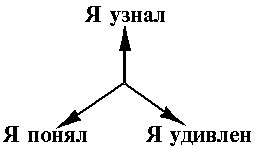
As a reflection, you can ask students to fill out an “answer sheet”
Geneva Convention of 12 August 1949
|
DO GOODHandout 2
|
Yulia VASYUKHINA,
teacher
social science disciplines,
Rybinsk