
Repetition and generalization of material on the topic: “Evolutionary teaching”
Lesson Objectives:
– introduce students to the life and work of the great English scientist Charles Darwin;
– systematize, consolidate and generalize knowledge about the species, population, driving forces of evolution, mechanisms of speciation, main directions of evolution, characteristic features of micro- and macroevolution;
– stimulate the intellectual activity of students, develop the ability to systematize, compare, and express their own point of view.
Equipment and materials: portrait of Charles Darwin; tables and diagrams for laboratory work on aromorphoses, idioadaptations and degeneration; video about the adaptation of organisms to living conditions.
During the classes
“Science is a drama of ideas.” These words belong to the great physicist of the 20th century. Albert Einstein. The creators of discoveries are people, the makers of mistakes are people. In the arena of science, ideas, theories and hypotheses created by people fight, compete, and defend their rightness. Today we will talk about the greatest discovery of the 19th century. – Ch. Darwin’s theory of natural selection.
Life and work of Charles Darwin
If we allow ourselves the freedom of our imagination, it may suddenly turn out that animals are our brothers in pain, illness,
death, suffering and disaster, our slaves in the hardest work, companions in entertainment -
share with us descent from a common ancestor - and we are all molded from the same clay.
In his autobiography, Darwin wrote: “Quite early on, I read a volume of “Wonders of Nature” that my comrades had, and often entered into disputes with other boys regarding the correctness of the information reported in this book. Towards the end of my school life, my brother became interested in chemistry and set up a decent laboratory with homemade apparatus in the closet. He allowed them to serve him during experiments. I was very interested in this, and our studies often lasted until late at night. These classes had the most profound educational value of all that I learned during my school years. They introduced me practically to the importance of experimental science.”
Studying at Cambridge was sluggish. Darwin found it boring to study theological dogma. But he plunged headlong into his favorite pastime - studying nature. This was facilitated by acquaintance with major natural scientists who lived in this scientific center.
Expedition on the Beagle ship (student message)
The book “Introduction to the Philosophy of Natural Science” by Professor Henslow awakened in Darwin an ardent desire, with his modest efforts, to contribute at least in some way to the construction of the majestic edifice of natural science. This opportunity presented itself to him after graduating from university. He was recommended by Professor Henslow as a naturalist on the Beagle ship, which was setting off on a voyage around the world.
The Beagle was equipped by the British War Department to carry out topographical and hydrological research in the area of the South American continent and the Falkland Islands. It was there that the British government turned its gaze to find territories that would further expand the scope of the colonies of this power. In addition, the Beagle had to collect taxes in Australia, New Zealand and other colonies.
The naturalist on this expedition was not the most important person. He wasn't even paid a salary. Moreover, he had to buy all the scientific equipment himself. The conditions are not the best. Nevertheless, Charles willingly accepted this offer, although his father and other relatives did not approve of his intentions.
On December 27, 1831, the Beagle set sail from Devon Port. He visited the island of Gran Canaria, the Cape Verde Islands, Rio de Janeiro, walked along the east coast of South America with a stop at the Falkland Islands, spent a lot of time off the coast of Patagonia, then passed by the island of Tierra del Fuego, along the west coast of South America with a stop to the islands of the Galapagos archipelago, Tahiti, Mauritius, Madagascar, the Cape of Good Hope, St. Helena, again to South America and from there to England. The journey lasted 5 years (until 1836).
Paleontological finds in Patagonia played a special role in the development of Darwin’s scientific views. Studying these materials, he came to the conclusion that there was a close relationship between extinct and modern sloths, anteaters and armadillos of South America.
As a result of a detailed study of the flora and fauna of the Galapagos Islands, he came to the conclusion that most species of animals and plants are unique to this archipelago. At the same time, they all show clear similarities with the inhabitants of South America. This means that they come from mainland species that moved to the islands and adapted to very unique local conditions of existence.
Thus, for the first time, he answered the question about the reasons for the emergence of specific species and their adaptability to living conditions.
On the island of St. Helena, Darwin encountered such a factor affecting the flora and fauna as a foreign species. During the colonization of the island, pigs and goats were brought here. Over the course of decades, they completely destroyed the dense forests, and in their place tough herbaceous vegetation developed. As a result, the fauna of the island also changed. 8 species of mollusks became extinct.
In Australia, Darwin encountered a peculiar world of marsupials that are not found anywhere else, although in South America and southern Africa the climate is quite suitable for them. It remained to be assumed that the fauna of Australia developed under conditions of isolation.
The Beagle reached the shores of England on October 2, 1836. The material collected by Darwin was varied and numerous and was of great value. In addition to Darwin, other major scientists from England - zoologists and geologists - took part in its processing. Darwin was responsible for general leadership, writing introductory articles and monographs on some groups (birds, barnacles, etc.)
And finally, the most important thing. A graduate of the Faculty of Theology, Darwin was a believer before setting off on his journey. Over the 5 years of his journey, his worldview changed dramatically: both as a result of his observations and under the influence of the ideas of the geologist Lyell, whose book “Fundamentals of Geology” he read during the expedition, Darwin comes to the conclusion about the historical development of the organic world. He returned from the trip convinced of the existence of completely material causes of evolution.
In March 1839, Darwin married his cousin Emma Wedgwood, a cheerful, attractive, educated woman. The marriage turned out to be happy. Emma tirelessly cared for her sick husband. She was his support in life and did not doubt his integrity even when Darwin was working on the theory of natural selection, the atheistic essence of which she understood before others. After all, Emma Darwin was pious, like all her contemporaries.
Darwin worked for many years to substantiate his theory. He completed it around 1858, but was in no hurry to publish it. In 1858, he received a letter from Alfred Russel Wallace, who was working in Malaya, with a manuscript of an article in which Wallace summarized his theory of natural selection. This theory largely coincided with the conclusions of Darwin himself. This stunned him, and he writes to Professor Lyell: “Your words that someone would get ahead of me were more than justified. I have never seen a more striking resemblance. If Wallace had my manuscript... he could not have written a better or more concise review."
Lyell and botanist Joseph Hooker managed to find a subtle and fair solution to the issue. At their suggestion, both works were read at a meeting of the Linnean Society in the same 1858. Then, at the urging of Lyell and Hooker, Darwin began preparing his manuscript for publication. Friends believed that he had the right to this, because. formulated his hypothesis during his trip around the world, and over the next 22 years he collected facts confirming it.
Both scientists were noble people. They acknowledged each other's contributions to theory. Wallace wrote: “I have always been aware, and am now aware, that Mr. Darwin began to study this question before me, and that the difficult task of expounding the origin of species did not fall to my lot. I had already tested my strength for a long time and was convinced that it would not be enough for this difficult task. I feel that I do not have such tireless patience in collecting numerous facts, this amazing ability to draw conclusions ... finally, that incomparable style, clear and convincing - in a word, all those qualities that make Mr. Darwin a perfect man and, perhaps, most capable for the enormous work which he undertook and accomplished.”
And Darwin told his friends: “It would be better if I burned my book, if only he (Wallace) or anyone else did not consider my act unseemly.”
Darwin's work entitled “The Origin of Species by Means of Natural Selection” was published on November 24, 1859. The interest in this book exceeded all expectations. The entire circulation (1250 copies) was sold out in one day. Even during Darwin’s lifetime, “The Origin of Species” went through 6 editions and was translated into all European languages, including Russian. Charles Darwin died in 1882 and was buried as a national hero in Westminster Abbey, London, next to Isaac Newton.
What is the essence of Darwin's theory?
Conversation
Certain natural scientific and economic prerequisites contributed to Darwin’s creation of the doctrine of the evolution of the organic world. Name them.
In the 19th century many scientists did not recognize the idea of evolution of the organic world. Provide evidence for the evolution of plants and animals. Which of them can be considered direct and which indirect?
In the middle of the 19th century. Darwin created the theory of evolution, which is still recognized by most scientists in the world today. Name the main provisions of Darwin's evolutionary theory. What are the results and driving forces of evolution according to Darwin?
It is known that all organisms have a similar organization of molecular processes. What does this indicate?
Explain from the point of view of C. Linnaeus, J.B. Lamarck and Charles Darwin, the formation of a long neck in a giraffe and the absence of visual organs in a mole rat.
During his trip around the world, Charles Darwin in South America got acquainted with the finds of fossil giant sloth skeletons and discovered their similarity with the skeletons of living species. He described differences in the species composition of the fauna of North and South America and discovered a high percentage of endemism among birds and reptiles of the Galapagos archipelago. What conclusions can be drawn from these observations?
Carrying out observations in Down, C. Darwin found that on identical areas of soil there are a larger number of plant individuals if they belong not to one, but to several species. What is the reason for these differences?
conclusions
Darwin proved that in natural conditions the adaptation of organisms to the environment and the emergence of new species occurs with the participation of natural selection. Those individuals that survive and reproduce better are those that have changes that are beneficial to the body. Natural selection is the preferential survival and reproduction of the fittest.
The reason for natural selection, according to Darwin, is the constant struggle for existence. Darwin distinguished three forms of struggle for existence: interspecific, intraspecific, and struggle against unfavorable conditions of the inorganic environment.
Natural selection creates a variety of adaptations of organisms to the environment.
The current state of evolutionary teaching
(student message)
There were three periods in the development of Darwinism.
1. Romantic(from 1859 to the middle of the 19th century), when the doctrine of evolution triumphed over the metaphysical approach, which gave impetus to the development of new fields of science: evolutionary paleontology, comparative anatomy, evolutionary embryology, etc. Timiryazev was the propagandist and supporter of the doctrine of Charles Darwin , brothers Kovalevsky, Sechenov, Haeckel, Muller and others.
2. Denial period(1900–1926). The formation and development of genetics led to its opposition to Darwinism. At this time, the doctrine of evolution continued to develop, and the theory of natural selection began to be subjected to severe criticism. This theory was opposed by others: mutational (author de Vries), chromosomal (author Thomas Morgan), migration, hybridization theories, which argued that species are not formed gradually, evolutionarily, but spasmodically - revolutionary.
3. Modern synthetic period. A synthetic theory of evolution has been developed. The time of its origin is considered to be 1926, when the Soviet scientist S.S. Chetverikov formulated the main principles of population genetics and combined Darwinism with modern genetics. On this basis, the modern doctrine of microevolution was formed.
Today we distinguish between microevolution and macroevolution. Microevolution- this is the initial stage of the evolutionary process that occurs within a species (in populations) and leads to the formation of new species. It is accessible to direct observation and study, because can happen in a historically short time. In this case, populations are considered as elementary evolutionary units in which microevolution occurs. Mutations and combinations of genes that underlie hereditary variability are called elementary evolutionary material.
Hereditary variability, various types of isolation, population waves and natural selection in the light of the modern synthetic theory of evolution are the driving forces or elementary evolutionary factors. Under the influence of these factors, the genetic composition of the population (gene pool) changes. A change in the genetic composition of a population is called an elementary evolutionary event (phenomenon). This is a necessary prerequisite for the evolutionary process. The genotype of individuals in populations is characterized by different qualities due to mutational and combinational variability. As a result of the struggle for existence and natural selection, individuals with some genotypes are preserved in the population, while others die. The process lasts over a number of generations and can lead to significant changes in the genotype. The consequence of this is the formation of new subspecies and species.
A sign of the emergence of a new species is the inability of the separated population to interbreed with individuals of the original population and produce fertile offspring. This reproductive isolation is the main sign of the emergence of a new species.
As the main characteristic of a species, the criterion of reproductive isolation was proposed in 1968 by Mayer, who proposed the following definition of a species: “A species is a system of populations that are similar in their genetic and morphological characteristics, completely reproductively isolated from other similar systems.” A species is a genetically closed (isolated) system, but as a biological system it is an open system, because connected by metabolism and energy conversion with the external environment. In this regard, isolation should be considered as a factor in speciation.
Isolation is a violation of free crossings and genetic separation of populations. Isolation is the most essential property of a species, which ensures its reality and integrity. The ability to isolate is a valuable species adaptation. Isolation does not necessarily imply a complete cessation of interbreeding between populations. To maintain the uniqueness of the gene pool, and thereby the direction of its transformations, only certain restrictions are sufficient.
At the intraspecific level there are:
– geographic or spatial isolation;
– morphological isolation;
– genetic isolation;
– biological isolation.
Macroevolution is the process of emergence and development of larger taxonomic categories. It flows over vast areas, sometimes covering the entire biosphere and periods of time of hundreds of millions of years. When studying it, it is impossible to experiment. Until now, experts have studied the course of macroevolution from fossil remains. And only now have scientists been able to build computer models of the evolutionary process. For modeling macroevolution, the Darwinian principle of natural selection based on random hereditary changes turned out to be quite sufficient. This series of computer experiments simulating progressive evolution brilliantly confirmed Darwin's theory.
Questions for the conversation
What is the essence of the teachings of I.I. Schmalhausen on the forms of natural selection?
What is the essence and what are the results of microevolution?
Describe the various methods of speciation.
What directions of the evolutionary process do you know?
How does biological progress differ from biological regression?
Describe the main evolutionary paths leading to biological progress.
Main directions of evolution
Laboratory work “The main paths of biological progress”
1. Aromorphoses
Analyze the anatomical and functional features of the brain of vertebrates (fish, birds, mammals). Fill out the table. 1 and draw a conclusion about the relationship between the complication of various parts of the brain and the behavioral characteristics of animals.
Fish brain. The divisions are distinguished: forebrain, diencephalon, midbrain, cerebellum and medulla oblongata. All departments are of great importance in the life of fish. The cerebellum controls the coordination of movements and balance of the animal. The medulla oblongata plays an important role in controlling breathing, blood circulation, digestion and other essential functions of the body.
Bird brain. The visual thalamus of the midbrain is well developed. The cerebellum is significantly larger than in other vertebrates, because it is the center of coordination and coordination of movements, and birds make very complex movements in flight. Compared to fish, birds have enlarged forebrain hemispheres, which is why the behavior of birds is more complex. True, many actions are innate, instinctive (formation of pairs, building a nest, incubation). During their life, birds develop a large number of conditioned reflexes.
Mammalian brain. The brain consists of the same sections as in other vertebrates, but the cerebral hemispheres have a more complex structure. The outer layer of the cerebral hemispheres consists of nerve cells that form the cerebral cortex. It can form folds and convolutions. The cortex is responsible for the formation of conditioned reflexes. The cerebellum is also well developed; it also has many convolutions. This is due to the coordination of complex movements of mammals. Mammals exhibit complex behavior. Due to the fact that the environment is extremely changeable, mammals constantly develop new conditioned reflexes, and those that are not reinforced by conditioned stimuli are lost. This feature allows mammals to quickly and very well adapt to environmental conditions.
Table 1
2. Idiomatic adaptations
Consider the structure of the legs of various birds, draw a conclusion about the adaptive significance of the changes, fill out the table. 2.
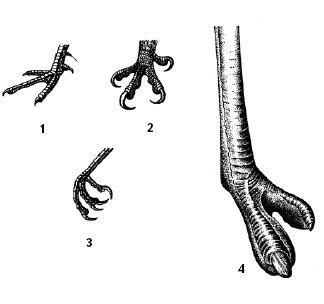
The structure of the legs of birds depending on their lifestyle.
The figure shows the legs: 1 – pheasant, 2 – eagle, 3 – sparrow, 4 – ostrich
The existence of a dependence of the structure of an organism on its way of life is proven, for example, by the structure of the legs in different species of birds. The legs of birds of prey (eagles, hawks) are equipped with long and sharp claws. Birds whose legs are adapted for walking (pheasants) have short claws. Running birds (bustard, ostrich) have very strong legs, with short and thick toes.
Doctor of Physical and Mathematical Sciences“Science at first hand” No. 4(34), 2010
about the authorDoctor of Physical and Mathematical Sciences, Honored Professor of the University. George Mason (USA), foreign member of the National Academy of Sciences of Ukraine, academician of the New York Academy of Sciences, honorary professor of the Siberian Branch of the Russian Academy of Sciences, Moscow State University. Lomonosov and Jerusalem University. In 1961–1970 worked at the institutes of the USSR Academy of Sciences and Academy of Medical Sciences, from 1970 to 1978 at the All-Russian Academy of Agricultural Sciences. In 1974 he created the All-Union Research Institute of Applied Molecular Biology and Genetics of the All-Union Academy of Agricultural Sciences in Moscow. Areas of scientific interest: the effect of radiation and chemicals on genes, the study of the physicochemical structure of DNA, repair in plants, the effect of radioactive contamination on the human genome. Awarded the International Gregor Mendel Medal and the N. I. Vavilov Silver Medal. Author of more than 20 books, including on the history of science, published in Russia, the USA, England, Germany, Vietnam and the Czech Republic, editor-in-chief of the 10-volume encyclopedia "Modern Natural Science", member of the editorial board of the magazine "SCIENCE First Hand" |
In 1859, the book of the English scientist Charles Darwin “The Origin of Species by Means of Natural Selection, or the Preservation of Favorable Breeds in the Struggle for Existence” was published. It immediately became a bestseller, topping the list of world-famous books and bringing its author the laurels of being the only discoverer of evolutionary theory. However, the latter is not only inaccurate, but also historically unfair in relation to other scientists, Darwin’s predecessors and contemporaries, as is proven in the next “evolutionary essay” published in our journal from the forthcoming book of the famous scientist and historian of science V.N. Soifer “ Evolutionary idea and Marxists".
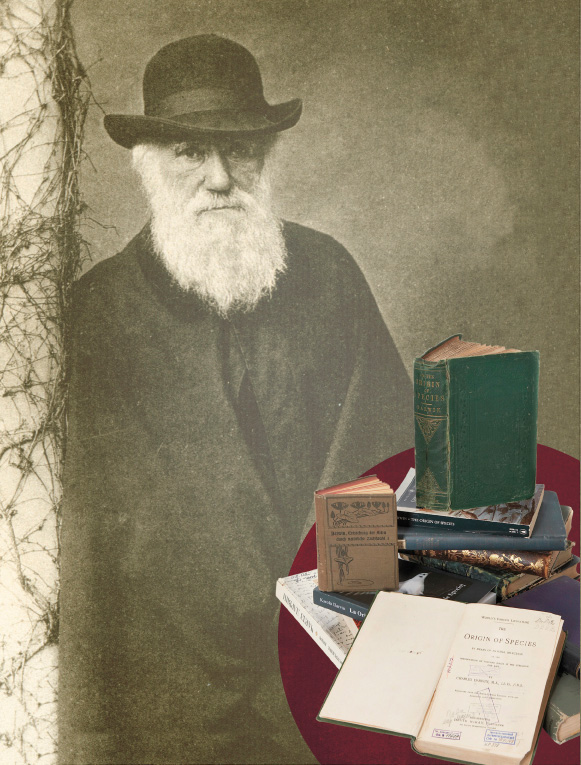
Charles Darwin was born on February 12, 1809 - the year the Philosophy of Zoology by Jean Baptiste Lamarck was published, in which the first evolutionary theory was presented in detail and in detail.

Darwin did not excel at school. Things were also not going well at college, and in the end his father sent him away - to Scotland, where in October 1825 the 16-year-old boy began studying at the Faculty of Medicine at the University of Edinburgh (this choice of his son’s future specialty was not accidental - his father was a successful doctor ). After two years, it became clear that Charles would not be able to become a doctor. A new transfer followed - this time to another famous university, Cambridge, but to the Faculty of Theology. Charles himself recalled about studying there: “... the time I spent in Cambridge was seriously lost, and even worse than lost. My passion for rifle shooting and hunting... led me into a circle... of young people of not very high morality... We often drank to excess, and then funny songs and cards followed. ... I know that I should be ashamed of the days and evenings spent in this way, but some of my friends were such nice guys, and we all had so much fun that I still remember this time with pleasure.”

Finally, in May 1831, Darwin passed his baccalaureate examination. He was supposed to study at the faculty for two more semesters, but events turned out differently. Taking advantage of a rare opportunity, he hired, against the wishes of his father, on the Beagle, which was setting off on a voyage around the world under the command of Captain Robert Fitz Roy. Darwin's duties as a naturalist included collecting animals, plants, and geological specimens. Over five years, Darwin visited South America, the Pacific Islands, New Zealand, Australia and other parts of the globe.
The five-year trip around the world came to an end on October 2, 1836. Now Darwin had to begin describing the collections he had collected and publishing data about the trip. Three years later, his first book was published - “Voyage on the Beagle Ship” (or “Diary of Research”), which immediately brought enormous popularity to the young author. Darwin had a rare gift as a storyteller, able to highlight details and events, even those that were not very interesting at first glance.
Did it all start with Malthus?
When did Darwin first think about the problems of evolution? He himself mentioned many times that he came to his evolutionary hypothesis in 1842 and that he was inspired by this idea from the book of the great English economist Thomas Robert Malthus, “An Essay on the Law of Population” (1798). Malthus argued that the population on Earth is growing over time in geometric progression, but means of subsistence - only in arithmetic progression. Darwin claimed that this thesis struck him, and he translated this pattern to the whole of nature, suggesting that there is always a struggle for existence in it, since there are not enough sources of food and habitat for all those born.
The thesis about the existence of such a struggle between representatives of the same species ( intraspecific struggle), as well as between individuals of different species ( interspecies struggle), was Darwin's major innovation. He stated that evolution occurs due to the selection of individuals better adapted to the external environment ( natural selection). If there really is not enough space under the sun for all those born and the weak die in competition with the strong, then if some organism accidentally turns out to be more adapted to the environment, it will be easier for it to survive and produce more offspring. If the improved trait is retained by the descendants of the lucky one, then they will begin to crowd out their relatives less adapted to such an environment and reproduce faster. Nature will take a small step forward, and then, lo and behold, an even more fortunate person with an even more perfect structure will appear. And so - for millions of years, as long as life exists on Earth.
Darwin, according to him, began to think about the problems of species variability already during the voyage on the Beagle: “I came to the idea that species probably change from data on geographical distribution, etc., but over the course of several years I was helpless before the complete inability to propose a mechanism by which every part of every creature would be adapted to the conditions of their life.” Lamarck's idea of gradual improvement of species had become quite popular by this time. Just as a drop chisels a stone, statements about natural development and the emergence of new species that have been repeated for decades have done their job and accustomed people to the idea that evolution is permissible. It is appropriate to recall Benjamin Franklin with his thesis about man turning into one from an animal thanks to the production of tools, and Charles’s famous grandfather, Erasmus Darwin, a doctor and publicist, who set out in his essay “Zoonomy, or the Laws of Organic Life” (1795) the idea of organic progress.
Darwin repeatedly repeated (including in his declining years in his Autobiography) that the idea of natural selection dawned on him in October 1838, when he came across Malthus’s book. However, he allegedly did not make the first draft of his hypothesis at the same time, but only 4 years later, in 1842. This manuscript, often mentioned by Darwin in letters to friends, was not published during his lifetime.

After Darwin’s death, his son Francis published the book “Fundamentals of the Origin of Species,” in which he included two previously unknown manuscripts of his father - the above-mentioned first draft of the hypothesis on 35 pages (allegedly written by his father in 1842) and a more extensive one (230 pages). .) text marked 1844. Why these works were not published during the author’s lifetime, although, as we will see later, there was an urgent need for this, it is now hardly possible to find out.
Unpublished manuscripts
By 1842–1844, during the decades that had passed since Lamarck published his work on evolution, many facts had accumulated in biology that were quite consistent with evolutionary ideas. The idea has strengthened, and society has matured to accept it.
This is evidenced by another, curious, example. In 1843 and 1845 In England, a 2-volume work by an anonymous author, “Traces of Natural History,” was published. It outlined the idea of the evolution of the living world, pointed out the connection between related species, and cited the role of electricity and magnetism in this process as the reason for the change in species.
The author made the following analogy: metal filings form a characteristic pattern of a branched plant stem around one end of an electrical conductor or magnet pole and a pattern more similar to a plant root around the other. Therefore, it cannot be ruled out that plants arose this way, because electrical forces took part in their formation. Despite such superficial judgments, the author created a work that was read with unflagging interest.
One of Darwin's friends, writer and publicist Robert Chambers, sent him a copy of the sensational book, and Darwin read it with interest. Six years after the book was published, it became clear that Chambers was its author.
One letter from Darwin dates back to 1844, shedding light on the fact that it was in this year that he himself began to attach great importance to his thoughts about evolution, which was not the case before. He wrote a long letter to his wife Emma on June 5, 1844, in which he set out in lofty terms his will: in the event of his sudden death, to spend 400 pounds on finishing the just completed manuscript on evolution (the task was detailed - to select appropriate examples from books marked by Darwin, edit the text, etc.). On the other hand, it was in January of the same year, in a letter to the botanist Joseph Hooker, the son of the director of the Royal Botanic Garden and son-in-law of the then patriarch of geology, Charles Lyell, that Darwin said that he was thinking about the problem of variability of species.
Why did Darwin suddenly decide to address his wife with a special message? He actually complained about his health during these years (no diagnosis was made, and he remained sick for another 40 (!) years). It would seem that if he valued his idea of evolution so much that he was ready to spend money on paying fees from the inheritance he left, then he would have to spend all available energy and time on bringing the main work to the final stage. But nothing of the kind happened. One after another, he published thick books about anything, but not about evolution. In 1845, the second, revised edition of the “Diary of Travel on the Beagle” was published, in 1846 - a volume on geological observations in South America, in 1851 - a monograph on barnacles, then a book on barnacles, etc. the essay on evolution lay motionless. What was Darwin waiting for? Why were you afraid to expose your work to criticism from your colleagues? Perhaps he was afraid that someone would see in his work borrowing from other people's works without reference to the true authors?

What Darwin did do, however, was often remind his high-ranking friends in letters that he spent all his free time thinking about the problem of evolution. Some of Darwin's recipients knew his main thesis in very general terms: there are not enough supplies of food, water and other means of subsistence for all those born, only those who have the potential to survive are kept alive. They are the ones who ensure progress in the living world.
Edward Blyth and his idea of natural selection
Darwin's supporters later explained his strange slowness in publishing a work on evolution by the fact that he was allegedly absolutely convinced that this idea could not have occurred to anyone, which is why there was no reason to rush to publish the hypothesis, although his friends hurried Darwin with printing this work. This became clear from the surviving correspondence published after Darwin’s death (his son Francis reported that his father more than once carefully reviewed all his correspondence and selectively burned some of the letters).
However, it is unlikely that Darwin’s behavior is explained solely by unshakable confidence in his originality. In 1959, during the centennial celebration of the publication of On the Origin of Species, University of Pennsylvania anthropology professor Loren Eisley argued that Darwin had other reasons for delaying the publication of the evolutionary hypothesis for almost twenty years. According to Eisley, who carried out enormous research work, Darwin did not independently come to the idea of the struggle for existence, but borrowed it, and not at all from the economist Malthus, but from the then famous biologist Edward Blyth, who was personally close to Darwin.
Blyth was a year younger than Darwin, grew up in a poor family and, due to his difficult financial situation, was only able to complete a regular school. To support himself, he was forced to go to work, and spent all his free time reading and diligently visiting the British Museum in London. In 1841 he received the post of curator of the Museum of the Royal Asiatic Society in Bengal and spent 22 years in India. Here he carried out first-class research into the nature of Southeast Asia. In 1863, due to a sharp deterioration in his health, he was forced to return to England, where he died in 1873.
In 1835 and 1837 Blyth published two articles in the Journal of Natural History in which he introduced the concepts of the struggle for existence and the survival of those more adapted to the environment. However, according to Blyth, selection does not proceed in the direction of increasingly improved creatures acquiring properties that give them advantages over already existing organisms, but in a completely different way.
The task of selection, according to Blyth, is to preserve the invariance of the basic characteristics of the species. He believed that any new changes in organs (now we would call them mutations) cannot bring anything progressive to already existing species that have been well adapted to the external environment over millions of years. Changes will only disrupt the well-established mechanism of interaction between the environment and organisms. Therefore, all newcomers, inevitably spoiled by the disorders that have arisen in them, will be cut off by selection, will not withstand competition with well-adapted typical forms and will die out. Thus Blyth applied the principle of selection to wildlife, although selection was given a conservative rather than a creative role.
Darwin could not help but know Blyth's works: he held in his hands issues of journals with his articles and quoted them. He wrote, more than once, that he carefully and carefully followed all publications concerning the development of life on Earth, and especially those close to him in spirit. He also cited many other works of Blyth, paying tribute to the merits of his colleague, so he could not ignore his works on natural selection. However, he never referred to the article in which Blyth clearly and clearly presented the idea of the struggle for existence and natural selection.
Being proud and, as Eisley and a number of other historians believed, obsessed with the mania of shared glory, Darwin could take advantage of Blyth’s fundamental provisions, after which he began to put his notes in order. By 1844, he could actually prepare a rather voluminous manuscript on evolution, but, realizing the lack of originality of his work on the cornerstone issue of natural science, he waited, played for time, hoping that some circumstances would change something in the world and allow him to “save face” " That is why in his “Autobiography” he repeated once again: the only impetus for him to think about the role of natural selection was the book of Malthus. It was safe to refer to an economist, and not a biologist, who spoke about natural selection in the world of living beings several years earlier, because the priority in applying economic analysis to the situation in the biological world remained with the biologist, that is, with himself.
But even in this statement, meticulous historians found a stretch: although Darwin indicated the exact date when he read Malthus’s book (October 1838), neither in the essay of 1842, nor in the more voluminous work of 1844 did he refer to Malthus as he never once referred to the person who pushed him to the idea of evolution, and in the place where he mentioned him, it was not at all about the idea of competition.
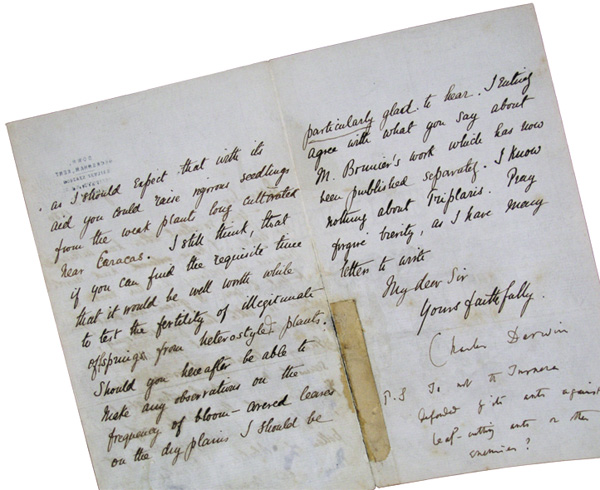
Eisley found several more similar cases in which Darwin treated his direct predecessors indelicately and thus partly confirmed the correctness of the opinion expressed back in 1888 by Professor Houghton from Dublin about Darwin’s views regarding the origin of species: “Everything that was new in them was wrong, and what was right was already known.”
Apparently, this explains the mysterious fact of Darwin’s reluctance to publish a work on the origin of species for almost 20 years.
Evolutionary views of Alfred Wallace
Perhaps this work would have continued to remain in Darwin’s chest if one day an event had not occurred that forced him to urgently change his position. In 1858, he received by mail the work of his compatriot Alfred Wallace, who was at that moment far from England. In it, Wallace presented the same idea about the role of natural selection for progressive evolution.

From reading Wallace's work, Darwin realized that his competitor had developed the hypothesis of evolution even more extensively than he had, since he had included in his analysis not only the material on domestic animals, which Darwin had predominantly used, but also gleaned facts from the wild. Darwin was particularly struck by the fact that Wallace's main formulations were stated in the same words as in his "Essay on Evolution", and it was Wallace who referred to Malthus.
How could it be that a competitor described the same thing? Alfred Russell Wallace (1823–1913) spent many years collecting scientific collections on expeditions to the Amazon and Rio Negro rivers, the Malay Archipelago and other places (he amassed a collection containing 125 thousand botanical, zoological and geological specimens; compiled dictionaries 75 adverbs, etc.). Wallace began to think about the problem of the origin of species almost simultaneously with Darwin. In any case, already in 1848, in a letter to his friend, traveler Henry Bates, he wrote: “I would like to collect and thoroughly study representatives of any one family, mainly from the point of view of the origin of the species.”
It is strange that researchers of Darwinism rarely mention the most important fact for understanding the formation of Wallace’s evolutionary views: in September 1855, four years before the first edition of Darwin’s Origin of Species, Wallace published in “ Annals and Magazine of Natural History” article entitled “On the Law Regulating the Appearance of New Species.” In it, Wallace not only made a statement about the existence of the process of evolution of species, but also pointed out the role of geographic isolation in the formation of new varieties. He even formulated a law: “The appearance of each species coincides geographically and chronologically with the appearance of a species very close to it and preceding it.” His other thesis was also significant: “Species are formed according to the plan of previous ones.” He based these conclusions not only on data from studying collections of contemporary species, but also on fossil forms.
A. Wallace, who knew wild nature well, drew examples from his expedition observations. In the introduction to his book “Darwinism...” (1889) he writes: “The weak point in Darwin’s works has always been considered that he primarily based his theory on the phenomena of external variability of domesticated animals and cultivated plants. Therefore, I tried to find a solid explanation for his theory in the facts of the variability of organisms in natural conditions."
Wallace, as is usual in the scientific community, sent his article to fellow biologists, including Darwin, whom he highly valued for his description of the voyage on the Beagle. A traveler and naturalist, Wallace was well aware of the difficult task of describing the monotonous journeys from place to place and the repetitive activities of day after day. Two prominent scientists - Lyell and Blyth - also drew Darwin's attention to Wallace's article, as Darwin reported in a letter to Wallace dated December 22, 1857.
Darwin responded positively to Wallace's work, and from that time on, correspondence began between them. But Darwin, intentionally or unwittingly, dampened Wallace's energy in regard to further thinking about the problem of the origin of species when, in one of his letters, he casually informed him that he had been working on the same problem for a long time and was writing a large book on the origin of species. This message had an effect on Wallace, as he wrote in a letter to Bates: “I am very pleased with Darwin’s letter, in which he writes that he agrees with “almost every word” of my work. Now he is preparing his great work on species and varieties, for which he has been collecting material for 20 years. He can save me the trouble of writing further about my hypothesis... in any case, his facts will be placed at my disposal, and I can work on them.”
However, as all Darwin’s biographers unanimously testify, despite his promises, Darwin did not provide his hypotheses and the facts in his hands to Wallace. Thus, the prominent Russian biographer of Darwin A.D. Nekrasov writes: “...Darwin, citing the impossibility of expressing his views in a letter, kept silent about the theory of selection. Wallace came to the idea of natural selection independently of Darwin.... Without a doubt, Darwin in his letters did not say a single word about either the principle of the struggle for existence or the preservation of the fittest. And Wallace came to these principles independently of Darwin.”
So, Wallace himself formulated the hypothesis of natural selection, and this happened on January 25, 1858, when the traveler was on one of the islands of the Moluccas archipelago. Wallace fell ill with a severe fever and, between attacks, suddenly clearly imagined how Malthus's reasoning about overpopulation and its role in evolution could be applied. After all, if Malthus is right, then the chances for better survival are higher for organisms that are better adapted to living conditions! In the “struggle for existence,” they will prevail over those less adapted, produce more offspring, and, due to better reproduction, occupy a wider area.
After this insight, a general picture quickly formed in the mind of Wallace, who had been thinking about the problems of species change for many years. Since he already had the basic facts, it was not difficult for him to hastily sketch out the theses of the article and also hastily complete the entire work, giving it a clear title: “On the tendency of varieties to move endlessly away from the original type.” He sent this article to Darwin at the first opportunity, asking for help with publication. As Nekrasov wrote, “Wallace sent it to Darwin, hoping that the application of the principle of the “struggle for existence” to the question of the origin of species would be as much news to Darwin as it was to himself.”
However, Wallace's assumption that Darwin would help popularize his work was a mistake and forever deprived him of his completely legitimate priority in publishing the principle of evolution through the selection of organisms best adapted to environmental conditions. Darwin not only did nothing to quickly publish Wallace's work, but also tried to take all measures to assert his primacy.
Hasty publication of Darwin's work
Having received Wallace's work, Darwin realized that he had been ahead of him. It is significant that in a letter to Lyell he admitted: “I have never seen such a striking coincidence; if Wallace had my 1842 manuscript, he could not have produced a better abridged review. Even its titles correspond to the titles of my chapters."
Having learned about what had happened, two of Darwin's friends - Charles Lyell and Joseph Hooker, who occupied a high position in the scientific circles of England, decided to save the situation and presented to the members of the Linnean Society of London both Wallace's completed work and Darwin's short (two pages) note “On the Tendency of Species.” to the formation of varieties and species through natural selection." Both materials were read on July 1, 1859 at a meeting of the society and then published under this date.
Darwin was not present at the meeting. There were two speakers - Lyell and Hooker. One of them eagerly, the other more restrainedly, said that they had witnessed Darwin’s creative torment and certified with their authority the fact of his priority. The meeting ended in deathly silence. Nobody made any statements.
By the end of the year, Darwin had completed On the Origin of Species and paid for its publication. The book was printed in two weeks; the entire circulation (1250 copies) was sold out in one day. Darwin hastily paid for the second edition, and a month later another 3,000 copies went on sale; then the third edition, corrected and expanded, was published, then the fourth, etc. Darwin's name gained enormous popularity.
Wallace, fully reconciled with the loss of priority, published the book “Contribution to the Theory of Natural Selection” in 1870, and in 1889 - a huge (750 pages) volume, symbolically entitled “Darwinism. An Exposition of the Theory of Natural Selection and Some of Its Applications".
The main purpose of these books was to illustrate with examples the principle of better survival of animals and plants that are more adapted to a given environment. Darwin largely used examples from the field of domestication of animals, breeding of livestock breeds, ornamental birds and fish, and selection of plant varieties.

It is appropriate to remember that Wallace had previously (in an article in 1856) rejected the evidence of examples of evolution drawn from the sphere of variability of domesticated animals, rightly pointing out that adaptive variability does not exist in domestic animals. After all, it is man who selects the best forms for him, and the animals themselves do not participate in the struggle for existence: “Thus, from observations of the varieties of domestic animals, no conclusions can be drawn regarding the varieties of animals living in the wild.”
Darwin's attitude towards Lamarck
Darwin never tired of repeating that his views had nothing in common with Lamarck’s, and throughout his life he never ceased to speak ill of his great predecessor. Perhaps the very thought that he was not the first and that 50 years before him the same thoughts had already been expressed by a Frenchman weighed heavily on him.

In the 1840s. in letters to Hooker, he wrote about this more than once: “... I don’t know any systematic works on this subject, except Lamarck’s book, but this is real rubbish”; “Lamarck... damaged the issue with his absurd, although intelligent, work”; “May Heaven save me from the stupid Lamarckian “striving for progress”, “adaptation due to the slow desire of animals” and so on.” True, he was forced to continue the last phrase from the above quotes with the words: “But the conclusions I come to do not differ significantly from his conclusions, although the methods of change are quite different.”
In one of his letters to Lyell, sent almost twenty years later, he wrote, discussing the significance of his predecessor’s work: “I look at it (the Philosophy of Zoology - author’s note), having read it carefully twice, as a miserable book , from which I gained no benefit. But I know you took advantage of her more.”

In general, as the Russian researcher of Darwinism Vl. Karpov, initially “Lamarck was alien and little understood by Darwin, as a representative of a different mentality, a circle of ideas, a different nationality.” Nevertheless, there were more fundamental similarities in the books of Lamarck and Darwin than differences. Both authors were unanimous on the central issue - the proclamation of the principle of progressive development of species, and both stated that it was the need to better meet the requirements of the external environment that forced species to progress.
Even the main groups of examples used by Darwin coincided with Lamarck's examples (breeds of dogs, poultry, garden plants). Only Darwin tried to give as many examples as possible, albeit of the same type, but giving the reader the impression of solidity and thoroughness; Lamarck limited himself to one or two examples for each point.
The extinction of species, according to Darwin, is a phenomenon that correlates with the origin of new species: “Since, over time, new species are formed by the activity of natural selection, others must become increasingly rare and finally disappear. ...In the chapter devoted to the struggle for existence, we saw that the most fierce competition should occur between forms that are closest - varieties of the same species or one genus or genera closest to each other, since these forms will have almost the same structure, a common warehouse and habits"
Where Darwin's thoughts differed greatly from Lamarck's was in his attempt to explain the causes of evolution. Lamarck looked for them inside organisms, in their inherent ability to change the structure of the body depending on the exercise of the organs (and in the second half of the 19th century, this position of Lamarck was regarded as extremely important, because the overwhelming majority of scientists believed that living beings inherently have the property of self-improvement). Darwin initially proceeded from the fact that the properties of organisms could change due to random reasons, and the external environment played the role of a controller, cutting off less adapted individuals. But since Darwin did not understand what could change in organisms, what hereditary structures were, these thoughts of his were entirely hypothetical philosophizing.
The paradox is that, having started with a categorical denial of Lamarck’s “stupid” views, Darwin gradually began to change his views and talk about the possibility of direct inheritance of characteristics acquired during life. The main reason for this change was the most important circumstance that also hindered Lamarck, namely: the lack of information about the laws of inheritance of traits, ignorance of the fact that there are special structures in the body that carry hereditary information.
However, if at the time of Lamarck science was still far from posing questions related to the discovery of the laws of heredity, and it would have been absurd to cast even a shadow of reproach against Lamarck, then by the time of the publication of “The Origin of Species” the situation had changed radically.
Gemmules instead of genes
The first approaches to understanding the laws of heredity, although still in a rather amorphous form, emerged as a result of the work of the German researcher Joseph Gottlieb Kölreuther (1733–1806), who worked for several years in St. Petersburg, and a number of other European scientists. Koelreuter in 1756–1760 conducted the first experiments on hybridization and formulated the concept of heritability.
The Englishman Thomas Andrew Knight (1789–1835), crossing different varieties of cultivated plants, came to the conclusion that in generations of hybrid plants, the characteristics by which the original varieties differ from each other “scatter” and appear individually. Moreover, he noted that there are minor individual differences that are not further “divided” during crossings and retain their individuality over generations. Thus, already at the beginning of the 19th century. Knight formulated the concept of elementary inherited traits.
Frenchman Auguste Sajray (1763–1851) in 1825–1835 made another important discovery. By monitoring Knight's "elementary traits," he discovered that some of them, when combined with others, suppressed the expression of those traits. This is how dominant and recessive traits were discovered.
In 1852, another Frenchman, Charles Naudin (1815–1899), studied these two types of traits more closely and, like Sajray, found that in combinations of dominant and recessive traits, the latter cease to appear. However, as soon as such hybrids are crossed with each other, they appear again in some of their descendants (later Mendel will call this process the splitting of characters). These works proved the most important fact - the preservation of hereditary structures that carry information about suppressed (recessive) traits, even in cases where these traits did not appear externally. Naudin tried to discover quantitative patterns of the combination of dominant and recessive traits, but, having undertaken to monitor a large number of them at once, he became confused in the results and was unable to move forward.
Darwin was well aware of the results of the work of these scientists, but he did not understand their significance, did not appreciate the great benefit that the discoveries of elementary hereditary units, the patterns of their combination and manifestation in descendants brought him. One more step should have been taken - to simplify the problem and analyze the quantitative distribution of traits in organisms that differ in one or at most two traits, and then the laws of genetics would have been discovered.
This breakthrough in science was made by the Czech naturalist and brilliant experimenter Johann Gregor Mendel, who in 1865 published a brilliant work in which he outlined the conclusions of experiments to identify the laws of heredity. Mendel built the scheme of his experiments precisely by simplifying the problem, when he decided to scrupulously monitor the behavior in crossings, first of only one inherited trait, and then of two. As a result, he proved, now definitively, the presence of elementary units of heredity, clearly described the rules of dominance, discovered quantitative patterns of combining units of heredity in hybrids and the rules for the splitting of hereditary characters.

Darwin, therefore, could have discovered these laws himself (he advanced in understanding the importance of elucidating the laws of inheritance, moreover, the progress of science at that time was so noticeable that what Mendel did was, in principle, accessible to anyone thinking about the problems of inheritance). But Darwin was not an experimenter. Of course, he could have simply read the work published by Mendel in German, but this also did not happen.
Instead, Darwin began to come up with a hypothesis (he pretentiously called it a theory) of pangenesis, about how the transmission of hereditary properties to descendants is carried out. He admitted the presence in any part of the body of “... special, independently reproducing and feeding hereditary grains - gemmules, which are collected in sexual products, but can be scattered throughout the body... each of which can restore in the next generation that part that gave them a start."
This hypothesis was by no means original: the same idea was put forward in his 36-volume History of Nature by Georges Louis Leclerc Buffon a hundred years before Darwin. Many major scientists, including those who helped Darwin strengthen his priority in proclaiming the role of natural selection in evolution (Hooker and Lyell), advised Darwin not to publish his “theory of pangenesis.” He verbally agreed with them, but in fact decided not to deviate from his own and included the corresponding chapter in the book “Changes in Animals and Plants under the Influence of Domestication,” published in 1868 (three years after Mendel’s work).
Until the end of his life, Darwin remained convinced that his theory of pangenesis was destined for a great future. Although in letters to those on whose help he depended all his life (Lyell, Hooker, Huxley), he coquettishly called this brainchild of his “a rash and half-baked hypothesis,” said that “to engage in such speculation is “pure nonsense”” and promised “ try to convince himself not to publish" a statement of his "theory", but he was not going to fulfill this promise, but only tried to dampen the critical fervor of his high friends. To other addressees at the same time he wrote something completely different: "Deep in my soul I believe that it contains a great truth" (letter to A. Gray, 1867), or: "I would rather die than cease to protect my poor child from attacks" (letter to G. Spencer, 1868). The same notes sounded later : “With regard to pangenesis, I am not going to fold my banner” (letter to A. Wallace, 1875); “I had to think a lot about this issue, and I am convinced of its great significance, although it will take years until physiologists figure out that sexual organs only collect reproductive elements” (letter to J. Romains, 1875).
A tailless cat cannot be obtained by exercise.
In most cases, when discussing Darwin's pangenesis hypothesis, it is customary to say that its author did not go far from his time, but, they say, Mendel was ahead of his time by 35 years (it is not for nothing that his laws were actually rediscovered 35 years later). But we can say it another way: in understanding the mechanisms of inheritance of traits, Darwin did not reach the level of his contemporary Mendel.

Meanwhile, this question was the most important for Darwin. In the first edition of The Origin of Species, he proceeded from the premise that changes in living beings occur frequently and that they are indefinite: some are of some benefit to the organism, others are harmful or useless. He believed that with regard to useful traits, everything is clear - they are mainly inherited. “Any change, no matter how insignificant, and no matter what reasons it depends on, if it is in any way beneficial for an individual of any species, any such change will contribute to the preservation of the individual and will mostly be passed on to the offspring,” he wrote .

He believed that variability itself does not contain predetermination, original benefit. At this point he saw a radical difference between his views and Lamarck’s. There is no “internal striving for perfection”, no quality of predestination inherent in living beings in “improvement due to slow desire” (the words “slow desire” belonged to Darwin himself).
However, despite the demonstrative rejection of the Lamarckian postulate, Darwin, as the above quote shows about the inheritance of “any change, no matter how insignificant, and no matter what reasons it depends on,” as long as it “was beneficial for an individual of some kind.” species,” was even at this initial moment not too far from Lamarck. He also attributed to organisms an inherent (that is, predetermined) ability to retain, in a hereditary manner, any useful deviations. The hypothesis about gemmules perceiving useful stimuli did not change the essence of the matter. Darwin did not have a single fact in favor of his hypothesis, and in this sense, Lamarck with his “organ exercise” was no weaker in argumentation than Darwin.
Having rejected the Lamarckian inheritance of acquired characteristics, Darwin did not offer anything real in return, but simply bypassed the question of what, how and when is inherited, dividing possible variability into two types. The first is definitely favorable changes that the organism “craves” and which are the result of a direct response to the action of the environment (he denied such inheritance). The second type is uncertain changes that may not occur under the direct influence of the external environment (they are inherited). At this point, he saw the main difference between his doctrine and the views of Lamarck, which he considered erroneous.
But why are the first changes not inherited, while the second ones arise and are inherited? He had no idea what hereditary structures were and how they were passed on to descendants. By calling them gemmules, he did not come one iota closer to understanding their nature. Intuitively, he may have guessed that no matter how much you cut off the tails of cats so that when they jump from chests of drawers they do not knock down Wedgwood figurines, the offspring of tailless cats will still have tails.
"Jenkin's Nightmare"
The only belief that Darwin shared with most of his contemporaries was that the transmission of heredity is akin to the fusion of a fluid, say blood. The blood of the record-breaking mother merges with the blood of an ordinary, unremarkable father - and the result is a half-breed. And if identical organisms (siblings) give birth to offspring, then the offspring will be of “pure blood” (they will later be called a pure “line”).
Darwin fully adhered to these views, which is why he was so devastatingly affected by the criticism expressed in June 1867 by the engineer Fleming Jenkin in the journal Northern British Review. Jenkin was a major expert in electricity and electrical networks; with his personal participation, cables were laid in Europe, South and North America; he is considered the father of the telegraph; all his life he was the closest friend of William Thomson, who later became Lord Kelvin. A year before the publication of his devastating article on the main principle used by Darwin to justify natural selection, Jenkin became a professor in the school of engineering at University College London. With his brilliantly written article, containing not a single superfluous word, Jenkin was considered to have at one blow cut down Darwin's explanation of the inheritance of beneficial biases.
Let's say Darwin is right, Jenkin explained, and there is an indefinite variability, thanks to which some single organism has acquired a deviation that is useful for it (necessarily a single one, otherwise it is a massive Lamarckian change under the influence of the environment). But this lucky one will interbreed with an ordinary individual. This means that the “blood” will be diluted - the trait in the offspring will retain only half of the useful evasion. In the next generation, a quarter will remain of him, then an eighth, etc. As a result, instead of evolution, useful deviations will dissolve (Jenkin used the term swamping“swamping” or absorption of altered potency by unchanged hereditary potencies).
The criticism of the engineering professor caused Darwin to experience what he called “Jenkin’s nightmare.” As Darwin admitted in one of his letters, the correctness of his opponent’s reasoning “can hardly be questioned.” In a letter to Hooker dated August 7, 1860, Darwin wrote: “You know, I felt very humbled when I finished reading the article.”
In the end, after much thought, he saw only one way to respond to criticism: to admit that the environment directly influences heredity and thereby leads to changes in a large number of individuals living in new conditions. Only in this case, “resorption” of new signs should not have occurred. Such recognition of the role of the massive direct influence of the environment in progressive evolution meant a decisive convergence with Lamarck’s position and recognition of the principle of inheritance of acquired characteristics.
Agreeing with the arguments contained in Jenkin’s devastating article regarding Darwin’s mechanism of inheritance of useful traits, Darwin decided to make corrections to the next, fifth, and then sixth edition of the book. “...I am so sad,” he wrote to Hooker, “but my work is leading me to a somewhat greater recognition of the direct influence of physical conditions. Perhaps I regret it because it diminishes the glory of natural selection.”
Meanwhile, a way out for Darwin already existed. Gregor Mendel had proven several years earlier that hereditary structures do not merge with anything, but retain their structure unchanged. If the unit responsible for the transmission of heredity (later called the genome) is changed, and as a result the trait it controls is formed in a new way, then all the descendants of this first hereditarily changed organism will carry the same new trait. “Jenkin's Nightmare,” which had spoiled so much of Darwin's blood, was completely dissipating, and evolutionary theory was taking on a complete form. But Darwin did not know Mendel’s work, and he himself did not think of his conclusions.
Literature:
1) Loren C. Eisley. Charles Darwin, Edward Blyth, and the theory of natural selection // Proc. Amer. Philosopher Soc. 1959. V. 03, N. 1. P. 94–115.
2) Edward Blyth. An attempt to classify the “varieties” of animals, with observations on the marked seasonal and other changes which naturally take place in various British species, and which do not constitute varieties // (London). 1835. V. 8. P. 40–53; On the physiological distinction between man and all other animals, etc. // The Magazine of Natural History(London), n.s.. 1837. V. 1. P. 1–9, and P. 77–85, and P. 131–141; excerpts from Blyth's works, as well as Arthur Grout's memoirs of him, published in the August issue of the magazine Journ. of Asiatic Society of Bengal, 1875, are given as an appendix to Eisley’s article (see note /1/, pp. 115–160).
3) Wallace A.R. Darwinism. A presentation of the theory of natural selection and some of its applications. Translation from English prof. M. A. Menzbir. Library for self-education. M.: Publishing house. Sytin, 1898. T. XV.
4) Fleeming Jenkin. Review of The Origin of Species // North British Review. 1867. V. 46. P. 277–318.
See “Science at First Hand”, 2010, No. 3 (33). pp. 88–103.
“Science at first hand”, 2005, No. 3 (6). pp. 106–119.
Née Wedgwood, daughter of the owner of the famous ceramics factory (called "Wedgwood" to this day). She was famous for many virtues, including being a good pianist and taking music lessons from Chopin himself.
The most prominent American Darwinists of the 20th century. E. Mair, S. Darlington, S. D. Gould later disputed the opinion regarding Darwin's borrowing of E. Blyth's ideas, based on the fact that Blyth talked about the selection of degraded forms, and not about progressive evolution.
Already in the 20th century. Wallace's “law” on the role of geographic isolation in accelerating the evolution of species became an integral part of the doctrine called the “Synthetic Theory of Evolution,” developed by the American scientist of Russian origin F. G. Dobzhansky. S. S. Chetverikov was the first to point out the role of geographic isolation for gene selection in 1926 in his work “On some aspects of the evolutionary process from the point of view of modern genetics.”
CHARLES DARWIN DARWIN, CHARLES (ROBERT) 1809–1882), ENGLISH NATURALIST AND WRITER, FOUNDER OF THE TEACH OF THE ORIGIN OF ANIMAL AND PLANT SPECIES BY NATURAL SELECTION. BORN FEBRUARY 12, 1809 IN SHREWSBURY. I STUDYED MEDICINE AT THE UNIVERSITY OF EDINBURGH FOR TWO YEARS, FOR WHICH I FINALLY CONSIDERED MYSELF UNFIT. IN 1827 HE ATTENDED THE UNIVERSITY OF CAMBRIDGE, WHERE HE STUDYED THEOLOGY FOR THREE YEARS, BUT THEN DECIDED THAT HE HAD NO APPEAL FOR THIS ACTIVITY.
Charles Darwin was born on February 12, 1809 in the family of a doctor. While studying at the universities of Edinburgh and Cambridge, Darwin gained a deep knowledge of zoology, botany and geology, and a skill and taste for field research. The book “Principles of Geology” by the outstanding English geologist Charles Lyell played a major role in the formation of his scientific worldview. Lyell argued that the modern appearance of the Earth took shape gradually under the influence of the same natural forces that operate at the present time. Darwin was familiar with the evolutionary ideas of Erasmus Darwin, Lamarck and other early evolutionists, but he did not find them convincing.

In 1831, after graduating from university, he set off on a trip around the world on the Royal Navy expedition ship Beagle as a naturalist and returned to England only in October. During his trip, Darwin visited the island of Tenerife, the Cape Verde Islands, the coast of Brazil, Argentina, Uruguay, in Tierra del Fuego, Tasmania and the Cocos Islands and made a huge number of observations in zoology, botany, geology, paleontology, anthropology and ethnography. He outlined their results in the works Diary of a Naturalist’s Research, Zoology of the Voyage on the Beagle Ship, Structure and Distribution of Coral Reefs, etc.

Upon returning from his voyage, Darwin begins to ponder the problem of the origin of species. He considers various ideas, including Lamarck's idea, and rejects them, since none of them explains the facts of the amazing adaptability of animals and plants to their living conditions. What the early evolutionists thought was a given and self-explanatory seems to be the most important question for Darwin. It collects data on the variability of animals and plants in nature and under domestication. Many years later, recalling how his theory arose, Darwin would write: “I soon realized that the cornerstone of man’s success in creating useful races of animals and plants was selection. However, for some time it remained a mystery to me how selection could be applied to organisms living under natural conditions."

After reading Malthus's book On Population, in October 1838 Darwin came up with the idea of the origin of species through natural selection. For 20 years he worked on it. In 1856, on Lyell's advice, he began preparing his work for publication. In 1858, the young English scientist Alfred Wallace sent Darwin the manuscript of his article “On the Tendency of Varieties to Deviate Unlimitedly from the Original Type.” This article contained an exposition of the idea of the origin of species through natural selection. Darwin was ready to refuse to publish his work, but his friends, geologist Charles Lyell and botanist G. Hooker, who had long known about Darwin’s idea and were familiar with the preliminary drafts of his book, convinced the scientist that both works should be published simultaneously.

In 1859, he published his book The Origin of Species by Means of Natural Selection, in which he hypothesized that the currently existing species of animals and plants are not constant, but variable and descended from some other species through gradual evolutionary changes. Man, in his opinion, descended from monkeys.


Basic principles of Charles Darwin's evolutionary theory. 1. Within each species of living organisms, there is a huge range of individual hereditary variability in morphological, physiological, behavioral and any other characteristics. This variability may be continuous, quantitative, or intermittent qualitative, but it always exists.

3. Life resources for any type of living organism are limited, and therefore there must be a struggle for existence either between individuals of the same species, or between individuals of different species, or with natural conditions. In the concept of “struggle for existence,” Darwin included not only the individual’s actual struggle for life, but also the struggle for success in reproduction. 2. All living organisms reproduce exponentially.

4. In the conditions of the struggle for existence, the most adapted individuals survive and give birth to offspring, having those deviations that accidentally turned out to be adaptive to given environmental conditions. This is a fundamentally important point in Darwin's argument. Deviations do not arise purposefully in response to the action of the environment, but randomly. Few of them prove useful in specific conditions. The descendants of a surviving individual, who inherit the beneficial deviation that allowed their ancestor to survive, turn out to be more adapted to the given environment than other members of the population. 5. Darwin called survival and preferential reproduction of adapted individuals natural selection.


On these postulates, impeccable from a logical point of view and supported by a huge number of facts, the modern theory of evolution was created. Darwin's main merit is that he established the mechanism of evolution, which explains both the diversity of living beings and their amazing expediency and adaptability to the conditions of existence. This mechanism is gradual natural selection of random undirected hereditary changes. The most important advances in evolutionary biology in recent years have been achieved thanks to the active application of ideas and methods of molecular genetics and developmental biology in evolutionary research.


1. Within each species of living organisms, there is a huge range of individual hereditary variability in morphological, physiological, behavioral and any other characteristics. This variability may be continuous, quantitative, or intermittent qualitative, but it always exists. 2. All living organisms reproduce exponentially.

3. Life resources for any type of living organism are limited, and therefore there must be a struggle for existence either between individuals of the same species, or between individuals of different species, or with natural conditions. In the concept of “struggle for existence,” Darwin included not only the individual’s actual struggle for life, but also the struggle for success in reproduction. 4. In the conditions of the struggle for existence, the most adapted individuals survive and give birth to offspring, having those deviations that accidentally turned out to be adaptive to given environmental conditions. This is a fundamentally important point in Darwin's argument. Deviations do not arise purposefully in response to the action of the environment, but randomly. Few of them prove useful in specific conditions. The descendants of a surviving individual, who inherit the beneficial deviation that allowed their ancestor to survive, turn out to be more adapted to the given environment than other members of the population.

5. Darwin called the survival and preferential reproduction of adapted individuals natural selection. 6. Natural selection of individual isolated varieties in different conditions of existence gradually leads to divergence (divergence) of the characteristics of these varieties and, ultimately, to speciation. On these postulates, impeccable from a logical point of view and supported by a huge number of facts, the modern theory of evolution was created.

Charles Roobert Darwin - naturalist, pioneer of the theory of the origin of life on Earth from a common ancestor, through the evolution of each species. Author of the book “The Origin of Species”, a theory about the origin of man, the concepts of natural and sexual selection, the first ethological study “The Expression of Emotions in Man and Animals”, a theory about the causes of evolution.
Charles Darwin was born on February 12, 1809 in Shropshire (England) on the Darwin estate Mount House, in Shrewsbury. Robert Darwin, the boy's father, doctor and financier, son of the scientist naturalist Erasmus Darwin. Mother Suzanne Darwin, nee Wedgwood, daughter of the artist Josiah Wedgwood. There were six children in the Darwin family. The family attended the Unitarian Church, but Charles's mother was a member of the Church of England before her marriage.
In 1817, Charles was sent to school. Eight-year-old Darwin became acquainted with natural history and took his first steps in collecting. In the summer of 1817, the boy's mother died. The father sent his sons Charles and Erasmus in 1818 to a boarding school at the Anglican Church - “Shrewsbury School”.
Charles did not make progress in his studies. Languages and literature were difficult. The boy's main passion is collecting and hunting. The moral teachings of his father and teachers did not force Charles to come to his senses, and ultimately they gave up on him. Later, young Darwin developed another hobby - chemistry, for which Darwin was even reprimanded by the head of the gymnasium. Charles Darwin graduated from high school with far from brilliant results.
After graduating from high school in 1825, Charles and his brother Erasmus entered the University of Edinburgh, Faculty of Medicine. Before entering, the young man worked as an assistant in his father’s medical practice.
Darwin studied at the University of Edinburgh for two years. During this time, the future scientist realized that medicine was not his calling. The student stopped going to lectures and became interested in making stuffed animals. Charles' teacher in this matter was the freed slave John Edmonstone, who traveled through the Amazon in the group of naturalist Charles Waterton.
Darwin made his first discoveries in the field of anatomy of marine invertebrates. The young scientist presented his work in March 1827 at a meeting of the Plinian Student Society, of which he had been a member since 1826. It was in this same society that young Darwin became acquainted with materialism. During this time he worked as an assistant to Robert Edmond Grant. He attended Robert Jameson's natural history course, where he gained basic knowledge in geology, and worked with collections belonging to the Museum of the University of Edinburgh.
The news about his son’s neglected studies did not delight Darwin Sr. Realizing that Charles would not become a doctor, Robert Darwin insisted that his son enter Christ's College, Cambridge University. Although visits to the Plinian Society greatly shook Darwin’s faith in the dogmas of the church, he did not resist his father’s will and in 1828 passed the entrance exams to Cambridge.

Studying at Cambridge did not interest Darwin too much. The student's time was occupied by hunting and horse riding. A new hobby appeared - entomology. Charles entered the circle of insect collectors. The future scientist became friends with Cambridge professor John Stevens Henslow, who opened the door to the student into the wonderful world of botany. Henslow introduced Darwin to the leading naturalists of the time.
With his final exams approaching, Darwin began to push through the material he had missed in his core subjects. Took 10th place based on graduation exam results.
Trips
After graduating in 1831, Charles Darwin remained in Cambridge for some time. He spent time studying the works of William Paley's Natural Theology and Alexander von Humboldt's Personal Narrative. These books gave Darwin the idea of traveling to the tropics to study natural sciences in practice. To implement the idea of \u200b\u200bthe trip, Charles took a geology course from Adam Sedgwick, and then went with the reverend to North Wales to map the rocks.
Upon his arrival from Wales, Darwin received a letter from Professor Henslow with a recommendation to the captain of the expeditionary ship of the English Royal Navy, the Beagle, Robert Fitzroy. The ship at that time was setting off on a voyage to South America, and Darwin could take the place of a naturalist on the crew. True, the position was not paid. Charles's father categorically objected to the trip, and only a word in favor of Charles's uncle, Josiah Wedgwood II, saved the situation. The young naturalist went on a trip around the world.
 Charles Darwin's ship was called the Beagle
 The journey began in 1831 and ended on October 2, 1836. The crew of the Beagle carried out cartographic surveys of the coasts. Darwin at this time was busy on the shore collecting exhibits for a collection of natural history and geology. He kept a full account of his observations. At every opportunity, the naturalist sent copies of his notes to Cambridge. During his voyage, Darwin collected an extensive collection of animals, a large proportion of which was devoted to marine invertebrates. Described the geological structure of a number of coasts.
Near the Cape Verde Islands, Darwin made a discovery about the influence of time on geological changes, which he used in writing works on geology in the future.
In Patagonia, he discovered the fossilized remains of an ancient mammal called Megatherium. The presence of modern mollusk shells next to it in the rock indicated the recent extinction of the species. The discovery aroused interest in scientific circles in England.

The study of the stepped plains of Patagonia, revealing the ancient strata of the Earth, led Darwin to the conclusion that the statements in Lyell's work "on the persistence and extinction of species" were incorrect.
Off the coast of Chile, the Beagle crew encountered an earthquake. Charles saw the Earth's crust rising above sea level. In the Andes, he found shells of marine invertebrates, which led the scientist to guess about the emergence of barrier reefs and atolls as a result of the tectonic movement of the earth's crust.
On the Galapagos Islands, Darwin noticed differences between local animal species from mainland relatives and representatives of neighboring islands. The objects of the study were Galapagos tortoises and mockingbirds.

In Australia, the strange marsupials and platypuses seen were so different from the fauna of other continents that Darwin seriously thought about another “creator”.
With the Beagle team, Charles Darwin visited the Cocos Islands, Cape Verde, Tenerife, Brazil, Argentina, Uruguay, and Tierra del Fuego. Based on the results of the information collected, the scientist created the works “Diary of a Naturalist’s Research” (1839), “Zoology of the Voyage on the Beagle” (1840), “Structure and Distribution of Coral Reefs” (1842). He described an interesting natural phenomenon - penitentes (special ice crystals on the glaciers of the Andes).

After returning from his trip, Darwin began collecting evidence for his theory of species change. Living in a deeply religious environment, the scientist understood that with his theory he was undermining the accepted dogmas of the existing world order. He believed in God as a supreme being, but was completely disillusioned with Christianity. His final departure from the church occurred after the death of his daughter Ann in 1851. Darwin did not stop helping the church and providing support to parishioners, but when his family attended church services, he went for a walk. Darwin called himself an agnostic.
In 1838, Charles Darwin became secretary of the Geological Society of London. He held this post until 1841.
Doctrine of descent
In 1837, Charles Darwin began keeping a diary classifying plant varieties and breeds of domestic animals. In it he entered his thoughts on natural selection. The first notes on the origin of species appeared in 1842.
“The Origin of Species” is a chain of arguments supporting the theory of evolution. The essence of the doctrine is the gradual development of populations of species through natural selection. The principles set forth in the work were called “Darwinism” in the scientific community.

In 1856, preparation of an expanded version of the book began. In 1859, 1,250 copies of the work “The Origin of Species by Means of Natural Selection, or the Preservation of Favored Breeds in the Struggle for Life” were published. The book sold out in two days. During Darwin's lifetime, the book was published in Dutch, Russian, Italian, Swedish, Danish, Polish, Hungarian, Spanish and Serbian. Darwin's works are being republished and are still popular today. The natural scientist's theory is still relevant and is the basis of the modern theory of evolution.

Another important work of Darwin is “The Descent of Man and Sexual Selection.” In it, the scientist developed a theory about the common ancestor of humans and modern apes. The scientist conducted a comparative anatomical analysis, compared embryological data, on the basis of which he showed the similarity of humans and monkeys (simial theory of anthropogenesis).
In his book On the Expression of the Emotions in Man and Animals, Darwin described man as part of an evolutionary chain. Man, as a living organism, developed from a lower animal form.
Personal life
Charles Darwin married in 1839. He took marriage seriously. Before making a decision, I wrote down all the pros and cons on a piece of paper. After the verdict “Marry-Marry-Marry”, on November 11, 1838, he proposed to his cousin Emma Wedgwood. Emma is the daughter of Josiah Wedgwood II, uncle of Charles, Member of Parliament and owner of a porcelain factory. At the time of the wedding, the bride turned 30 years old. Before Charles, Emma rejected marriage proposals. The girl corresponded with Darwin during his travels to South America. Emma is an educated girl. She wrote sermons for a rural school and studied music in Paris with Frederic Chopin.

The wedding took place on January 29. The wedding in the Church of England was performed by the brother of the bride and groom, John Allen Wedgwood. The newlyweds settled in London. On 17 September 1842 the family moved to Down, Kent.
Emma and Charles had ten children. Children have achieved a high position in society. Sons George, Francis and Horace were members of the Royal Society of England.

Three babies died. Darwin associated the sickness of children with the kinship between himself and Emma (work “Sickness of descendants from inbreeding and the advantages of distant crossbreeding”).
Death
Charles Darwin died at the age of 73 on April 19, 1882. Buried in Westminster Abbey.

After her husband's death, Emma bought a house in Cambridge. Sons Francis and Horace built houses nearby. The widow lived in Cambridge during the winter. For the summer she moved to the family estate in Kent. She died on October 7, 1896. She was buried in Down, next to Darwin's brother Erasmus.
- Charles Darwin was born on the same day as.
- In the photo Darwin looks like.
- “On the Origin of Species” began to be called that only by the sixth reprint.

- Darwin also learned about new species of animals from a gastronomic point of view: he tasted dishes made from armadillos, ostriches, agouti, and iguanas.
- Many rare species of animals are named in honor of the scientist.
- Darwin never renounced his beliefs: until the end of his days, living in a deeply religious family, he was a doubtful person regarding religion.
- The Beagle's journey lasted five years instead of two.
| SIGNS | Evolutionary theory of C. LINNEAUS (metaphysician: nature was created by God and is unchangeable) | Evolutionary theory of J.-B. LAMARC
| Evolutionary theory CH. DARWIN 1809-1882
|
|
| Creating a theory | In the 18th century C. Linnaeus created an artificial system of nature in whichthe species was recognized as the smallest systematic unit . He enterednomenclature of double species names (binary) in Latin, which made it possible to systematize the organisms of different kingdoms known at that time into taxonomic groups. In 1751, his book “Philosophy of Botany” was published, where he outlined the binomial (binary) nomenclature he developed. Scientistdivided all living organisms known to him into groups, based on anatomical, morphological and partly physiological criteria(the work “System of Nature”, described 10 thousand species of plants and 4.5 thousand living species); in other words, his classification was artificial. Therefore, in this system, systematically distant organisms sometimes ended up in the same class, and related ones - in different ones. K. Linnaeusfor the first time placed humans and apes in the same order, but did not believe that man descended from monkeys.The species was identified and recognized as a truly existing unit of taxonomy. He realized the shortcomings of his system. | In 1794 - the term “Zoology of invertebrates” (basics of taxonomy of invertebrates), 1802 - “Biology”. In 1809 he proposedthe first holistic theory of evolution (the book “Philosophy of Zoology”), was appreciated only 50 years later. Analyzed and listed the similarities and differences between living and nonliving matter. Main point:matter and the laws of its development were created by the creator . The first factor of evolution – gradation internal “striving for improvement.” How and why this desire arose, Lamarck did not explain and did not even consider this question worthy of attention. The result of gradation is the simultaneous existence in nature of organisms of different levels of complexity.Second factor of evolution – The constant influence of the external environment determines the formation of the entire variety of adaptations of living beings.The third factor of evolution – heredity. Evolution according to Lamarck was presented as a continuous progressive movement from lower forms of life to higher ones (the ladder of beings). To explain the varying degrees of structural complexity observed among modern species, he assumed the constant spontaneous generation of life: the ancestors of more highly organized forms arose earlier and therefore their descendants went further along the path of progress.2 laws: The law of exercise and non-exercise, The law of inheritance of acquired characteristics. | Proposed in 1859 by the English naturalist Charles Darwin The evolutionary teaching of Charles Darwin includes three large components: 1. Evidence in favor of the historical development of the organic world 2. Statement on the driving forces of evolution 3. An idea of the paths of evolutionary transformations. |
|
| The emergence of life | K. Linnaeus shared metaphysical views on nature, seeing in it the original purposefulness and wisdom of the Creator. | Life arose and arises through repeated spontaneous generation from inanimate nature (polyphyly). | Life arose, from the very beginning, formed by the creator into one or more forms (monophyly) |
|
| Starting point of evolution | Primordial expediency, the wisdom of the Creator. | Matter and the laws of its development created by the creator. Unicellular organisms are capable of spontaneous generation, and organisms with a higher organization appeared as a result of long-term development. | Innate individuality, variability |
|
| The influence of the environment on the body | At the end of his life, he recognized that species could arise through crossing or as a result of changes in the environment. | The environment, having caused a change in habits, causes a change in the functional activity of the body (reduction of organs). The functional activity of organs causes changes in their nutrition, as a result of which their size and shape change | The environment (for example, famine, etc.) causes mass death of organisms and the survival of the fittest. Natural selection occurs |
|
| Variability | Species of plants and animals do not change; they have retained their characteristics since creation. When reproducing, they retain all the characteristics of the ancestral pair. Different species are not related. | Lamarck believed that changes arising under the influence of the environment can be inherited. He believed that intense exercise of organs leads to their enlargement, and lack of exercise leads to degeneration. So Lamarck explained the long nose of the anteater by the fact that from generation to generation his ancestors exercised their nose, sniffing in search of ants. He considered the reduction of eyes in moles to be a consequence of their lack of exercise over generations. Neither Lamarck nor his followers asked the question, why, in fact, intensive exercise, the use of an organ, should certainly lead to its improvement, improvement, and not, for example, to wear and tear, as machine parts wear out? | Natural selection, reinforced by sexual selection, produces progressive and progressive variability in descending generations. |
|
| Formation of new species | “There are as many species as the Almighty created at the beginning of life.” | The views are realNot exist , is a purely speculative concept invented forin order to make it easier to consider collectively a larger number ofindividuals, since, according to Lamarck, “in nature there is noanything other than individuals.”Individual variability is continuous, therefore, the boundary between species can be drawn both here and there - where is more convenient. Hereditary variability leads to the formation of progressive and degrading series of organisms, in accordance with the nature of the habitat. Explained the origin of man from the higher “four-armed apes.” | Increasing variability leads to divergence of characters and the formation of new species |


Other scientists: J. Cuvier, J. de Saint-Hilaire, the first Russian evolutionists
Main features of Charles Darwin's theory of evolution
1. Evidence of evolution. Charles Darwin finds evidence of the evolutionary process in many areas of biology, the main provisions of which are contained in three groups of scientifically based facts.Paleontological data. Darwin provides evidence from numerous scientific facts showing that ancient forms of organisms are very different from modern ones, but as we approach modern times, there is an increase in the similarity of fossil forms. This indicates the sequence of evolutionary transformations of living forms. Embryological materials. Comparison of embryos of modern animals that are very distant in their morphological similarity shows a great similarity between them. This can only be explained by unity of origin and family relationships. Biogeographic materials. A comparison of the faunas of oceanic islands that long ago separated from the continents shows, on the one hand, their common origin, and on the other, significant changes in the structure of organisms, which indicate different directions of evolution depending on different conditions of existence.
2. Driving forces of evolution. Darwin considered the following phenomena to be factors in the evolutionary process:variability, heredity and natural selection.
Among the phenomena of variability, he especially distinguished definite and indefinite forms. Of themonly indefinite variability can provide material for evolutionary transformations , because it occurs accidentally, its manifestations are multidirectional, and they can also be inherited, i.e. last for generations. Charles Darwin considered natural selection to be the main and guiding force in the evolution of organic forms. The theory of natural selection can be summarized as follows:
A. All species of animals and plants strive to increase their numbers. At the same time, the magnitude of variability also increases, i.e. numbers of individuals carrying small, i.e. Relatively harmless to life, deviations in traits that are inherited. This leads to the appearance of a large number of individuals of different quality, with certain characteristics. Living in the natural environment, they find themselves in a state of struggle for existence, both among themselves and between individuals of other species. In harsh environmental conditions, some organisms survive better than others and leave behind offspring with more advantageous hereditary traits.
V. The process of accumulation of useful deviations as a result of such selective average survival of individuals during the struggle for existence was called natural selection by Charles Darwin. In the course of natural selection, nothing is created anew. It is based on existing devices. When environmental conditions remain relatively stable, natural selection preserves existing adaptations. When living conditions change, the average statistical values of the survival of organisms change. Let's assume that the climate in the northern region has warmed sharply. Such phenomena have happened before and are possible in the future. Moreover, the mortality rate of individuals with thick fur may be higher than that of individuals with a genotype that produces less dense fur. Then individuals with hereditary properties that give less dense fur can accumulate in the population. The thinning of fur under warm environmental conditions can be assessed as the emergence of a new adaptation.
Natural selection is the main driving force of evolution . On its basis, in the course of the emergence of more and more new adaptations of organisms that contribute to their better survival and reproduction, a process arisesdivergence (divergences of characteristics of intraspecific groups, the emergence of new species and, on this basis, the identification of genera, families, classes and types). In the constructions of Charles Darwin, the concept of monophyletic evolution developed, showing that all organisms on Earth have common roots of origin. The unity of the entire world of living organisms on our planet is the result of biological evolution based on natural selection.
3. Difficulties, which Charles Darwin experienced when creating his theory:1. Lack of a scientifically developed theory of heredity. At the time Darwin wrote his book, nothing was known about the inheritance of traits. Mendel published his work in 1865, but at that time information spread very slowly, and very few people understood the significance of Mendel's work. His work never reached Darwin. In his experiments, he observed similar phenomena. But I didn’t pay enough attention to this. Therefore, Charles Darwin adhered to the then widespread ideas. That the characteristics of the parents are transmitted to the offspring in half (the theory of mixed inheritance). Because of this, there were difficulties with Jenkin's nightmare, which forced Darwin to partially accept the inheritance of useful adaptations. He even had to come up with the hypothesis of pangenesis (the existence of gemmules that penetrate germ cells and cause variability), which he himself soon abandoned.
2. A small amount of data confirming the operation of selection in natural conditions. There was little such evidence in Darwin's writings. Therefore, he had to first prove the theory of artificial selection, and then move on to proving the theory of natural selection. The theory of artificial selection was a cardinal issue of his evolutionary theory, proving that human activity can quickly and effectively change the characteristics of animals and plants in the direction he needs.
4. Darwin on the species. The consequence of natural selection is the emergence of adaptations that help species to exist more efficiently in the environment. Based on adaptations, it becomes possible to distinguish between varieties, i.e. Within a species, different groups of organisms appear, and then subspecies appear. Thus, instead of the old concept of an absolutely unchanging, stable and morphologically distinct species, Darwin put forward new ideas about a changing species. In his concept, he considered the view as if from two projections:
He represents a species in a given period of time as a really existing natural unit. However, according to Charles Darwin, a species as a real natural unit has a high degree of variability, so that sometimes it is very difficult to distinguish not only the varieties within a species. But also one view from another. Between the two species one can also find a number of transitional forms. Therefore, Darwin believed that species are distinct varieties, and varieties are incipient species.
A species over a long historical period of time is a truly evolving unit, undergoing a series of adaptive transformations in its morphological development. At the same time, species characteristics become even more variable and difficult to subdivide, because evolution is slow and gradual.
After the work of Charles Darwin, the evolutionary idea was first united by the concept of a really existing and developing species.
5 . Paths of evolutionary transformations Charles Darwin depicted it in the form of a diagram showing the course of divergent evolution, i.e. evolution with divergence of characters. This scheme especially emphasizes the importance of random factors in evolution, on the basis of which a natural historical process develops, leading to the progressive complication of organisms.